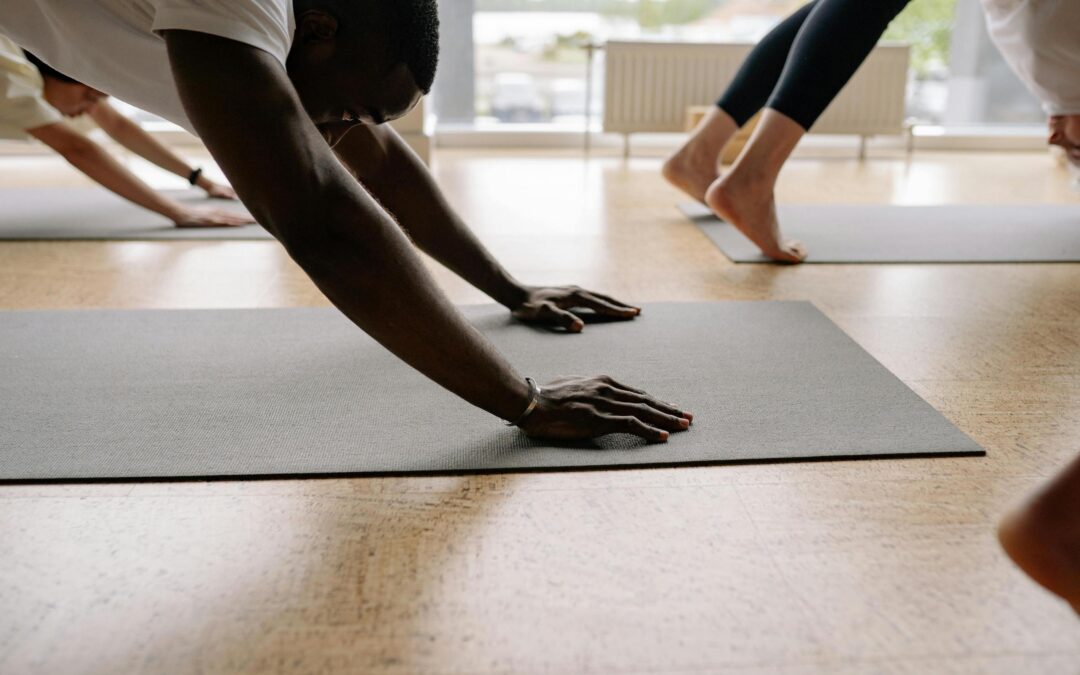
As part of my Mental Health Awareness series, I wanted to talk about movement and exercise, and the huge impact they can have on our mental and emotional wellbeing.
When people think about movement or exercise, many immediately think about weight loss, fitness goals, aesthetics, or physical health. And while those things are of course relevant, what I really want to focus on here is the relationship between movement and mental health.
Because movement is one of the most underrated tools we have for supporting mood, stress levels, our nervous system, energy, and overall wellbeing.
Modern life has disconnected many people from movement in a way that I think is affecting us more than we realise. We’re spending more time sitting, staring at screens, carrying stress, while giving our bodies very little physical outlet for it.
We are designed to move. That’s a core truth of the human body, and when we don’t move enough, it affects us mentally as well as physically.
You can’t consistently feel physically sluggish, tense, exhausted, uncomfortable in your body, or disconnected from yourself physically and expect that not to affect you mentally and emotionally.
Likewise, when people feel physically stronger, more energised, more capable, and more connected to their body, it often translates into how they feel mentally as well.
The body and mind are deeply interconnected.
Why Walking Is So Powerful
One of the biggest things I see with people who aren’t moving enough is a feeling of stagnation.
This often shows up as:
- Lower energy
- Brain fog
- Feeling mentally flat
- Feeling emotionally heavy
- Feeling stuck in your head
Ironically, when people feel like this, they often assume movement will drain them further, but movement often creates energy because it changes our physiology, shifts our state, and impacts our nervous system. And one of the simplest examples of this is walking.
Honestly, I think walking is one of the most underrated tools we have for supporting mental wellbeing, not just because of what it does physically, but because of what it can do emotionally and mentally.
Walking helps regulate stress, improve mood, create mental clarity, and support nervous system regulation. There’s also hard science behind why it can feel so beneficial.
Rhythmic movement helps regulate stress responses, and walking naturally creates left-to-right movement patterns of the body and eyes, which are thought to play a role in helping us process stress and emotional experiences.
Walking also supports better breathing, improves circulation, and often gives us something many people are lacking: mental space.
You’re moving forward physically, you’re taking in more sensory information, and ideally, you’re outdoors getting fresh air, daylight, and exposure to nature, all of which independently support mental wellbeing.
For many people, walking becomes almost like a moving reset button.
Movement Helps Us Process Stress
As I mention frequently, modern life creates chronic stress, but often very little physical release for it. Historically, when we experienced stress, it was usually accompanied by movement – fighting, escaping danger, or some other form of physical exertion.
Now, many people experience stress sitting down all day, while carrying tension physically and mentally, so movement helps complete that stress cycle.
It helps use up stress hormones, release physical tension, and regulate the nervous system. That’s one of the reasons people often feel calmer afterwards.
I also think certain types of movement do something else that’s incredibly important – they reconnect us to ourselves. Activities more like yoga, Pilates, dance, martial arts, stretching, or mindful strength training bring us out of our head and back into our body.
Many people spend much of their day overthinking, worrying, multitasking, mentally overstimulated, and disconnected from themselves physically, and movement can interrupt that state. It creates more presence, awareness, and connection.
So, for many people, movement becomes therapeutic emotionally as well as physically.
More Isn’t Always Better
One thing I do want to say is that exercise isn’t always beneficial in every situation. Exercise itself is a stress on the body.
When we’re rested and recovering well, that stress can be beneficial. But if someone is already chronically stressed, exhausted, under-eating, sleeping badly, or relying heavily on caffeine, then intense exercise can sometimes increase stress levels further.
I see this particularly with highly driven people who are constantly pushing themselves while ignoring what their body actually needs.
Sometimes the body needs movement, but sometimes it needs rest, recovery, nourishment, or sleep. Movement and exercise should support your nervous system, not keep you trapped in fight-or-flight mode.
And perhaps that’s the most important takeaway, is that movement doesn’t have to be extreme to be beneficial.
In fact, one of the biggest barriers I see is people believing exercise has to be all or nothing. When, for busy people, the most supportive and sustainable approach is finding consistent movement that suits you and works with your life (as it is now), rather than trying to force your life around exercise.
Movement is not just about fitness or physical appearance, it’s one of the most natural and powerful ways we can support our mental health and overall wellbeing.
Kate x
Work with me:
Many people either feel guilty that they’re not doing enough movement, or they’re constantly pushing themselves to do more. But there’s often a middle ground that gets overlooked. One that supports your nervous system, works with your lifestyle, and helps you feel better physically and mentally.
This is something I’ve helped clients with for many years, and it’s also a topic I speak about in workplace wellbeing sessions and workshops. If this is an area you’d like support with, either personally or within your organisation, feel free to get in touch. Or email info@katehorwood.com.